
Medication side effects can feel unpredictable — dizziness one day, digestive changes the next, fatigue or sleep shifts throughout the week. While some side effects fade naturally as your body adapts, others improve significantly with small lifestyle adjustments.
Lifestyle adjustments don’t replace medication — they make it easier for your body to work with your medication instead of feeling overwhelmed by it.
This lesson teaches you practical, low‑effort changes that support digestion, energy, hydration, mood, and sleep — all of which are directly linked to how your body processes medication.
1. Food Timing & Meal Pairing
Why it matters
Many medications are absorbed better — and cause fewer side effects — when taken with food. Food stabilizes blood sugar, reduces nausea, and slows absorption so your body tolerates the medication more gently.
Practical strategies
- Take medication during or right after a meal (unless told otherwise).
- Add a small protein or fat (a handful of nuts, yogurt, peanut butter) to reduce nausea.
- Avoid taking medication on an empty stomach, especially in the morning.
Try this
Pair breakfast with your medication two days in a row and observe if symptoms decrease.
2. Hydration: The Most Underrated Side‑Effect Tool
Why it matters
Many side effects — headaches, dizziness, fatigue, dry mouth — worsen when you’re even slightly dehydrated. Medication processing uses water, and hydration helps your body regulate blood pressure and digestion.
Practical strategies
- Drink one glass of water with your medication.
- Spread hydration throughout the day (small sips vs chugging).
- Add electrolytes if you tend to feel lightheaded or fatigued.
Try this
Track how you feel on a “hydration day” vs. a low‑hydration day. The difference can be surprisingly noticeable.
3. Gentle Movement to Support Energy & Digestion
Why it matters
Movement helps your body metabolize medication more smoothly and reduces side effects like fatigue, bloating, or heaviness.
Practical strategies
- 5–10 minute walk after meals
- Light stretching in the morning
- Gentle mobility breaks during long sitting periods
Try this
Walk for 5 minutes after one meal each day this week — no intensity needed.
4. Sleep Consistency to Stabilize Side Effects
Why it matters
Sleep affects hormone balance, energy, digestion, blood pressure, and nervous‑system sensitivity — all of which influence medication tolerance.
Practical strategies
- Keep a stable sleep/wake time
- Avoid screens 30–60 minutes before bed
- Keep caffeine earlier in the day
- Create a calming wind‑down routine
Try this
Choose one bedtime habit to repeat for the next 7 days (e.g., reading, stretching, dimmed lights).
5. Caffeine, Alcohol, and Additives: Hidden Triggers
Why it matters
Some substances amplify side effects:
- Caffeine can increase jitteriness, palpitations, or anxiety
- Alcohol can intensify dizziness or fatigue
- Artificial sweeteners can trigger digestive issues for some people
This doesn’t mean you must eliminate them — just adjust.
Practical strategies
- Move caffeine earlier in the day
- Reduce alcohol temporarily when starting a medication
- Notice how your digestion responds to artificial sweeteners
Try this
Cut caffeine after 2 pm for three days and observe if symptoms ease.
6. Pairing Lifestyle Adjustments With Symptom Patterns
From Lesson 2, you know your 3‑point check (energy, mood, digestion) and major patterns.
Now match them:
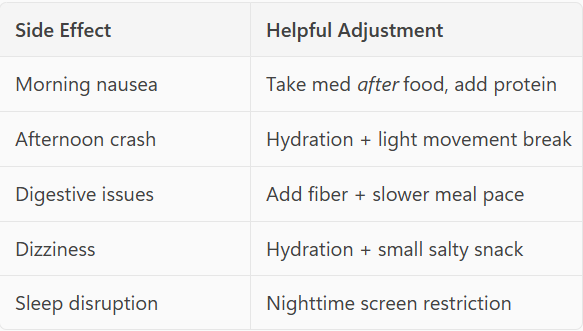
This creates a personalized, supportive rhythm.
7. Practical Steps for This Week
- Choose one lifestyle adjustment to start today
(hydration, meal pairing, movement, or sleep consistency). - Give it 2–3 days before evaluating its impact.
- Track the effect using your 3‑point check (Lesson 2).
- Add a second adjustment only if the first feels easy.
- Note which habits help the most so you can continue them long term.
Small adjustments often bring surprisingly big improvements.
You’ll learn that managing side effects isn’t about doing everything perfectly — it’s about choosing simple habits that make your medication easier to tolerate and improve your daily comfort.
By shifting a few routines, you’ll feel more stable, more energized, and better able to support your body as it adapts.
This prepares you perfectly for Lesson 4, where you’ll learn how to communicate effectively with your care team and know when to reach out for support.